Dekabi Stem Cell Clinic · Personalized Regenerative Care in Gangnam, Seoul
en-US
Can Stem Cell Therapy Rewire the Brain to Treat Depression?
Discover how stem cell therapy may rewire the brain to treat depression. Explore cutting-edge research and its potential benefits. Learn more today.
Introduction
Depression is among the most widespread mental health challenges worldwide, affecting more than 280 million people according to the World Health Organization. It is not only a condition of low mood but also a chronic disorder that impacts memory, focus, sleep, immunity, and even physical health. For many, depression becomes treatment-resistant, meaning that standard therapies such as antidepressants or talk therapy offer only partial relief or none at all.
This has led scientists and clinicians to explore novel approaches that go beyond symptom management and target the biological roots of depression. One of the most promising frontiers is stem cell therapy, a branch of regenerative medicine that harnesses the body’s natural repair mechanisms. Emerging research suggests that stem cells may not just ease symptoms but potentially rewire and restore brain circuits damaged by chronic depression.
Why Depression Is Hard to Treat
For decades, depression was explained primarily as a “chemical imbalance” of neurotransmitters like serotonin and dopamine. While these chemicals play a role, this theory alone cannot explain why some patients respond well to medication while others do not. Modern neuroscience has revealed that depression is far more complex, involving structural, functional, and inflammatory changes in the brain.
Key biological factors include:
Reduced brain plasticity
Brain plasticity refers to the brain’s ability to adapt, reorganize, and form new neural connections. In depression, plasticity is often diminished, leaving patients “stuck” in negative thought and emotional patterns.Chronic neuroinflammation
Studies show that individuals with depression often exhibit elevated inflammatory markers. Prolonged inflammation damages neurons and disrupts healthy communication between brain regions, particularly in mood-regulating circuits.Impaired neurogenesis
The hippocampus, a brain region critical for mood, stress regulation, and memory, generates new neurons throughout life. In depression, hippocampal neurogenesis slows down, contributing to emotional instability and cognitive decline.Stress-related damage
High levels of cortisol, the body’s stress hormone, shrink dendritic branches of neurons and impair signaling in areas like the prefrontal cortex, which is essential for decision-making and emotional regulation.
Together, these changes explain why depression is not simply a “mood disorder” but a whole-brain disorder—one that standard medications may not fully address.
How Stem Cell Therapy May Help
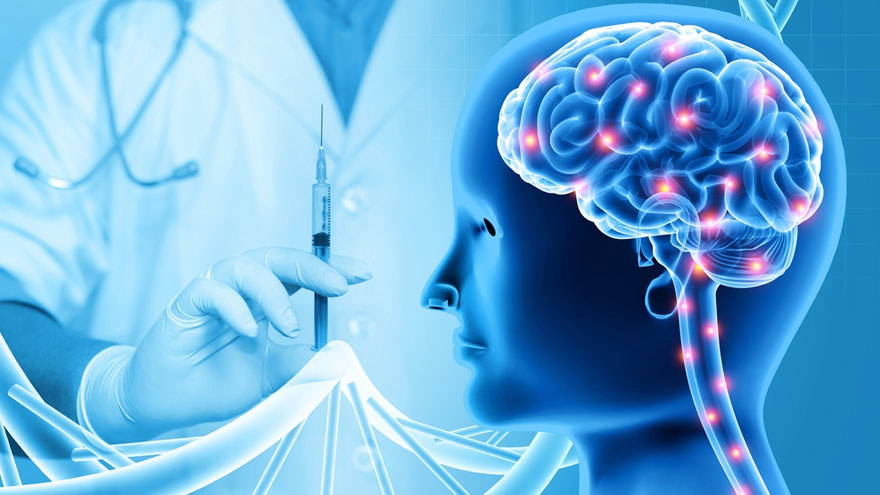
Stem cells are unique because they can self-renew and transform into different types of cells. In brain-related therapies, researchers primarily use mesenchymal stem cells (MSCs) derived from sources like bone marrow, fat tissue, or umbilical cord, and neural stem cells (NSCs) specifically oriented toward the nervous system.
Here’s how stem cell therapy could support brain rewiring in depression:
Stimulating Neurogenesis
Stem cells can encourage the birth of new neurons and glial cells. In the hippocampus, this may restore the brain’s ability to regulate mood, memory, and resilience to stress.Repairing Synapses
Depression weakens the connections between neurons. Stem cells release growth factors that help repair and rebuild synaptic pathways, enabling healthier communication between brain regions.Reducing Inflammation
MSCs are well-known for their anti-inflammatory properties. By reducing cytokine activity in the brain, they may relieve the damaging effects of chronic inflammation linked to depression.Releasing Neurotrophic Factors
Stem cells secrete brain-protective proteins such as BDNF (Brain-Derived Neurotrophic Factor) and GDNF (Glial cell line–derived Neurotrophic Factor). These molecules are essential for cell survival, growth, and synaptic plasticity—functions often impaired in depression.Balancing Neurotransmission
Although stem cells don’t directly replace lost neurotransmitters, by repairing circuits and reducing inflammation, they help normalize the balance of serotonin, dopamine, and glutamate systems that govern mood and motivation.
Through these mechanisms, stem cells could address depression at its biological foundation, offering a more restorative solution compared to symptomatic treatments alone.
Current Research Evidence
Preclinical Studies
Animal studies provide compelling evidence that stem cell therapy improves depressive-like behaviors. For example:
Rats exposed to chronic stress showed improved mood and cognitive performance after receiving stem cell transplants, linked to restored hippocampal neurogenesis.
Stem cell infusions reduced inflammatory markers in rodent models of depression, demonstrating strong anti-inflammatory effects.
Transplanted cells not only survived in the brain but also secreted neurotrophic factors that promoted resilience against stress.
Early Human Research
Human studies are still in the early stages, but the results are encouraging:
Patients with treatment-resistant depression have been included in small pilot studies using MSC infusions, with some reporting improved mood and reduced fatigue.
In cases of neurological diseases such as Parkinson’s disease or post-stroke depression, stem cell treatments aimed at repairing the nervous system have also led to notable improvements in mood and cognitive function.
Adjacent Clinical Insights
Interestingly, stem cell therapies used for autoimmune conditions and chronic pain have shown secondary benefits in mood regulation. This supports the hypothesis that reducing systemic inflammation and repairing tissue health indirectly improves emotional well-being.
Limitations
Despite these promising signals, stem cell therapy for depression remains experimental. Larger, controlled human clinical trials are required to establish effectiveness, safety, and long-term outcomes.
Challenges and Considerations

While the concept is powerful, several hurdles need to be addressed before stem cell therapy becomes a mainstream option for depression:
Delivery Methods
Getting stem cells into the brain is not simple. Intravenous infusions are common, but only a fraction of cells cross the blood-brain barrier. Researchers are exploring intranasal administration and direct brain injections for more targeted delivery.Safety Concerns
The primary safety concern is the risk of abnormal cell growth or tumor formation. Although MSCs are generally considered safe, long-term monitoring is essential.Standardization
Stem cell therapies vary widely in source, processing, and dosing. Without standardized protocols, results can be inconsistent across patients.Patient Variability
Depression is a heterogeneous condition. Some patients may respond well to stem cell therapy, while others may see minimal benefit depending on the biological drivers of their depression.
Future Outlook
Stem cell therapy represents a paradigm shift in how we think about treating depression. Instead of simply adjusting brain chemicals, regenerative medicine seeks to repair, restore, and renew brain function.
In the near future, stem cells may be used in combination with traditional treatments like antidepressants, psychotherapy, or transcranial magnetic stimulation (TMS) to maximize outcomes. They may also integrate with personalized medicine approaches, where treatment is tailored to an individual’s genetic and biological profile.
As clinical research expands, we can expect to see stem cell therapy move from the experimental stage toward becoming a viable option for patients with treatment-resistant depression—particularly those who have exhausted conventional therapies.
Conclusion
Depression is a complex brain disorder that goes beyond chemical imbalances, involving inflammation, disrupted neurogenesis, and impaired brain connectivity. Stem cell therapy offers a novel pathway to address these underlying causes, with early research pointing to its ability to promote neurogenesis, repair synapses, reduce inflammation, and restore brain resilience.
At Dekabi Stem Cell Clinic, we have spent more than two decades advancing regenerative therapies to improve patient outcomes in chronic disease, pain management, and anti-aging. While depression-specific stem cell treatments are still under investigation, the results we see in neurological and systemic health suggest a promising future for their application in mental health.
By harnessing the healing power of stem cells, we move closer to a world where depression can be treated not just as a disorder of mood—but as a condition of the brain that can be healed, renewed, and restored.